Know every agent. Control risk. Stay audit-ready.
KoraSafe™ gives AI governance teams one governed view of each agent: its owner, access, policies, controls, risks, and evidence. Teams move faster and stay audit-ready.
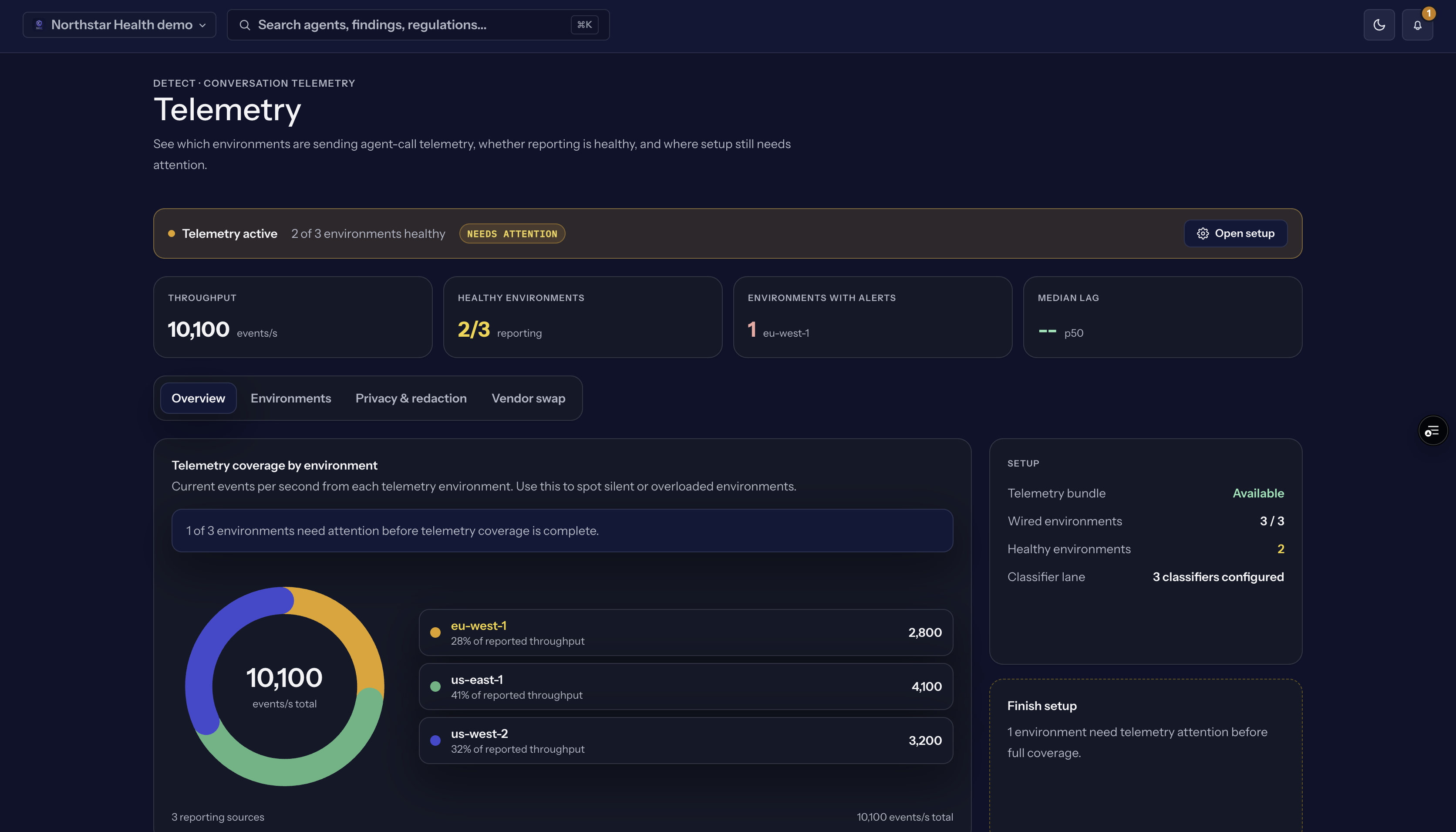
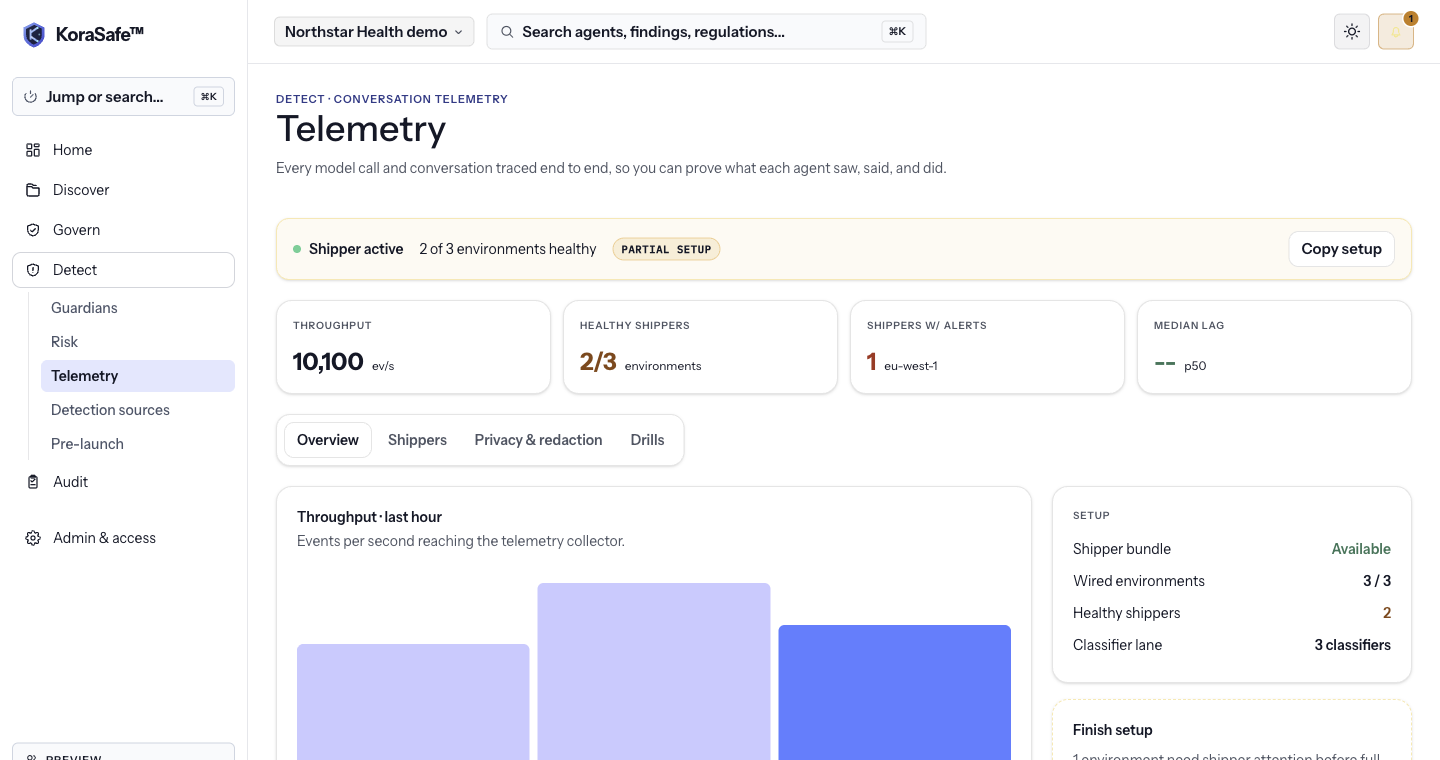 Watch the product overview
AI agents keep changing. Governance falls behind.
Approval is a snapshot. The agent keeps evolving across models, tools, data access, vendors, permissions, and autonomy.
But the governance record is split across assessments, policies, tickets, and evidence folders. As the agent changes, the connection between its risks, requirements, controls, decisions, and proof breaks, leaving stale risk views, repeated work, and evidence rebuilt under pressure.
Including sanctioned, shadow, third-party, and externally hosted agents.
And who is accountable for its risks and decisions?
Including data, models, tools, APIs, vendors, and autonomous actions.
Based on the agent's use case, risk, data, autonomy, and jurisdiction.
Across models, permissions, dependencies, behavior, or regulatory requirements.
Without rebuilding the evidence under deadline.
- Periodic inventories and manual reviews
- Fragmented ownership and evidence
- Agent changes surface after approval
- Controls remapped for every framework
- One-time approval with limited production visibility
- Audit preparation starts when the request arrives
- Continuous discovery and accountable ownership
- Shared agent context across teams
- Agent changes route into governed review
- Controls mapped once and reused
- Pre-launch and production oversight
- Evidence created as work happens
One platform from discovery to evidence.
KoraSafe connects the full AI agent governance lifecycle. Ownership, risk, access, dependencies, obligations, controls, findings, decisions, and evidence stay connected from initial discovery through production oversight.
Find sanctioned and shadow AI across agents, models, MCP servers, and vendor systems. Map each agent's ownership, access, dependencies, and supply-chain risk.
Determine what applies based on the agent's use case, risk, data, autonomy, and jurisdiction. Turn requirements into policies and reusable controls, then route approvals and change reviews.
Evaluate agents before launch and monitor their behavior in production, catching data exposure, prompt injection, unsafe output, drift, and policy violations.
Preserve decisions, findings, approvals, and remediation through connected evidence lineage. Generate tamper-evident packages and give auditors scoped, read-only access.
Governance starts with the agent.
KoraSafe starts with each agent. Its use case, data, autonomy, models, tools, and jurisdiction determine which requirements, policies, controls, monitoring, and evidence apply. Each step builds on the same agent context, from intake through production.
Bring approved, third-party, external, and newly discovered AI into one governed process. Assign an accountable owner and establish a clear identity for each agent.
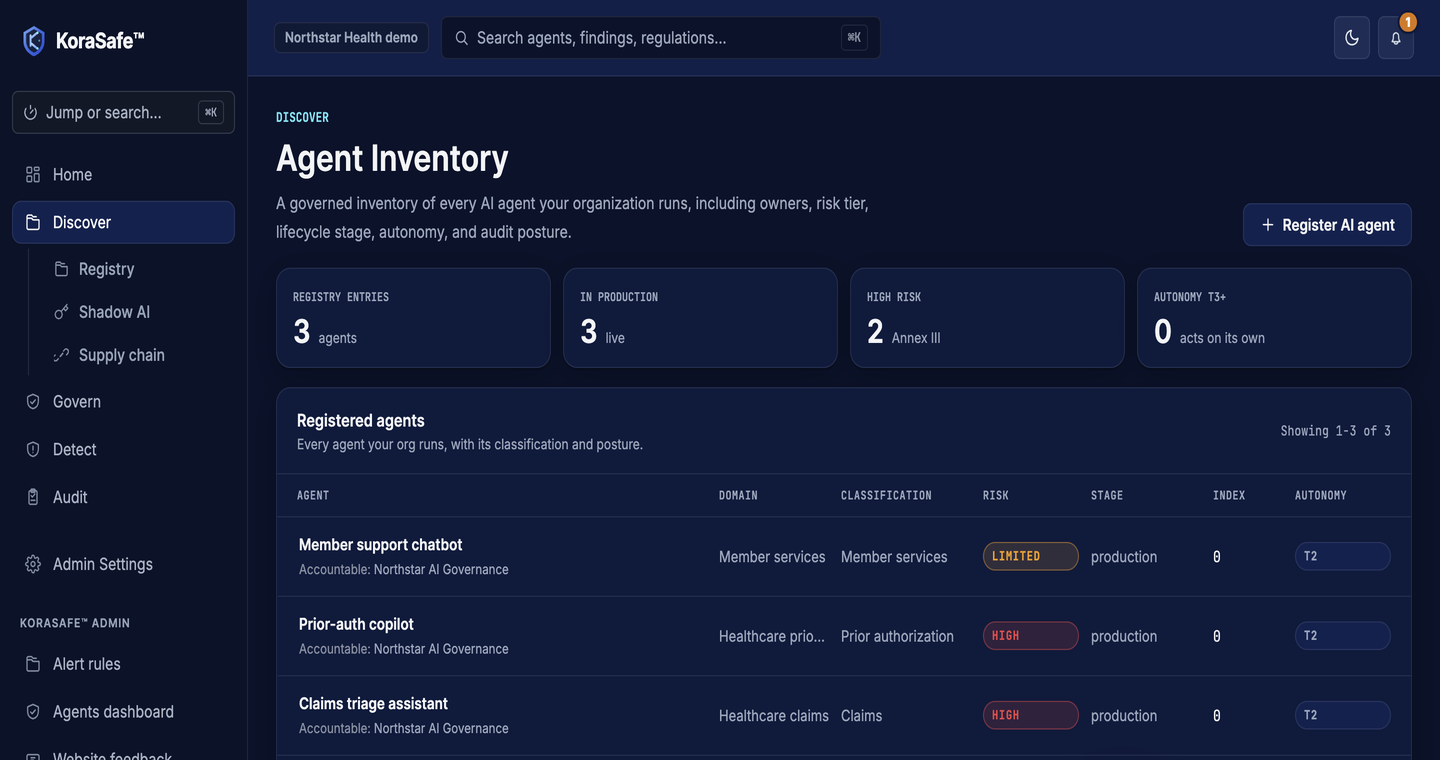
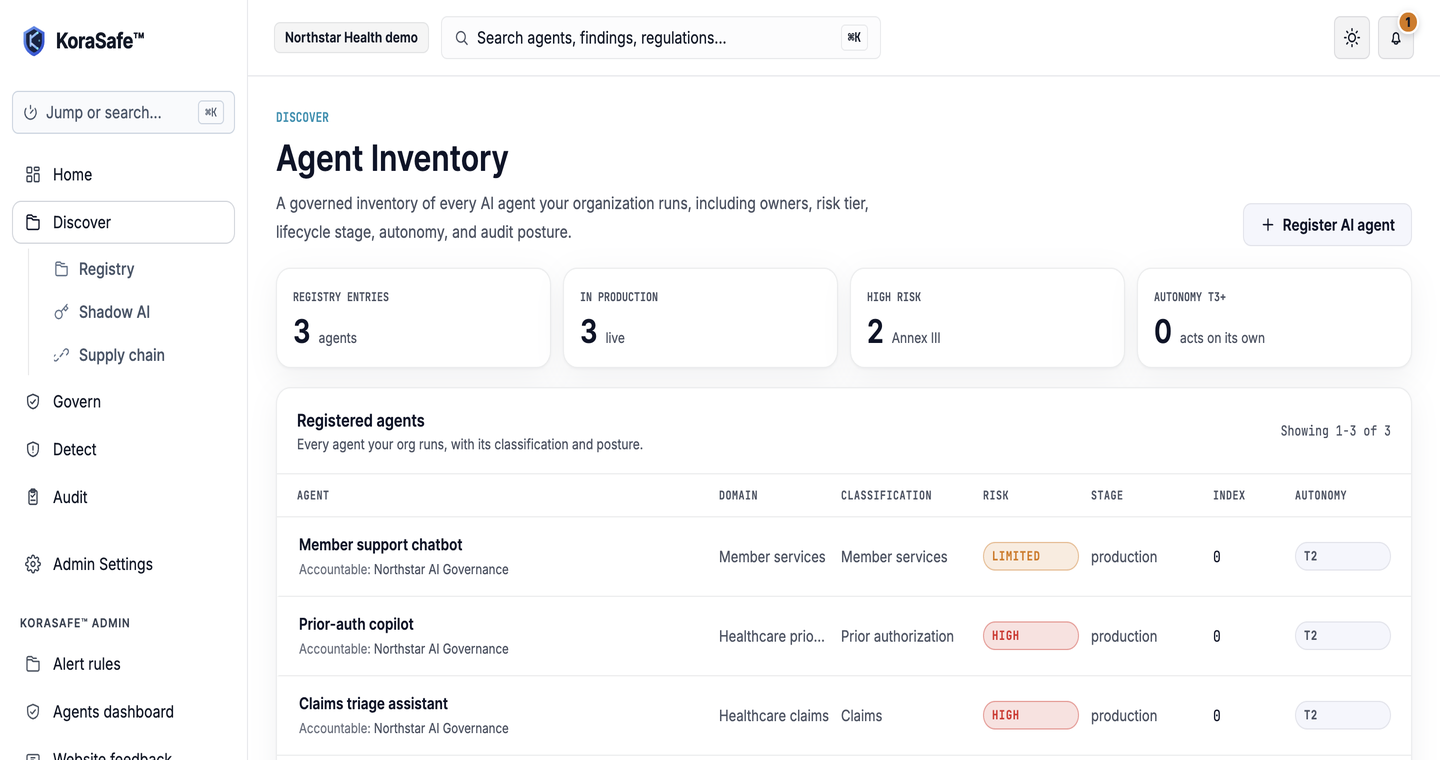
Capture the agent's use case, data, autonomy, models, tools, vendors, supply chain, lifecycle, jurisdiction, and risk. This context determines how the agent should be governed.
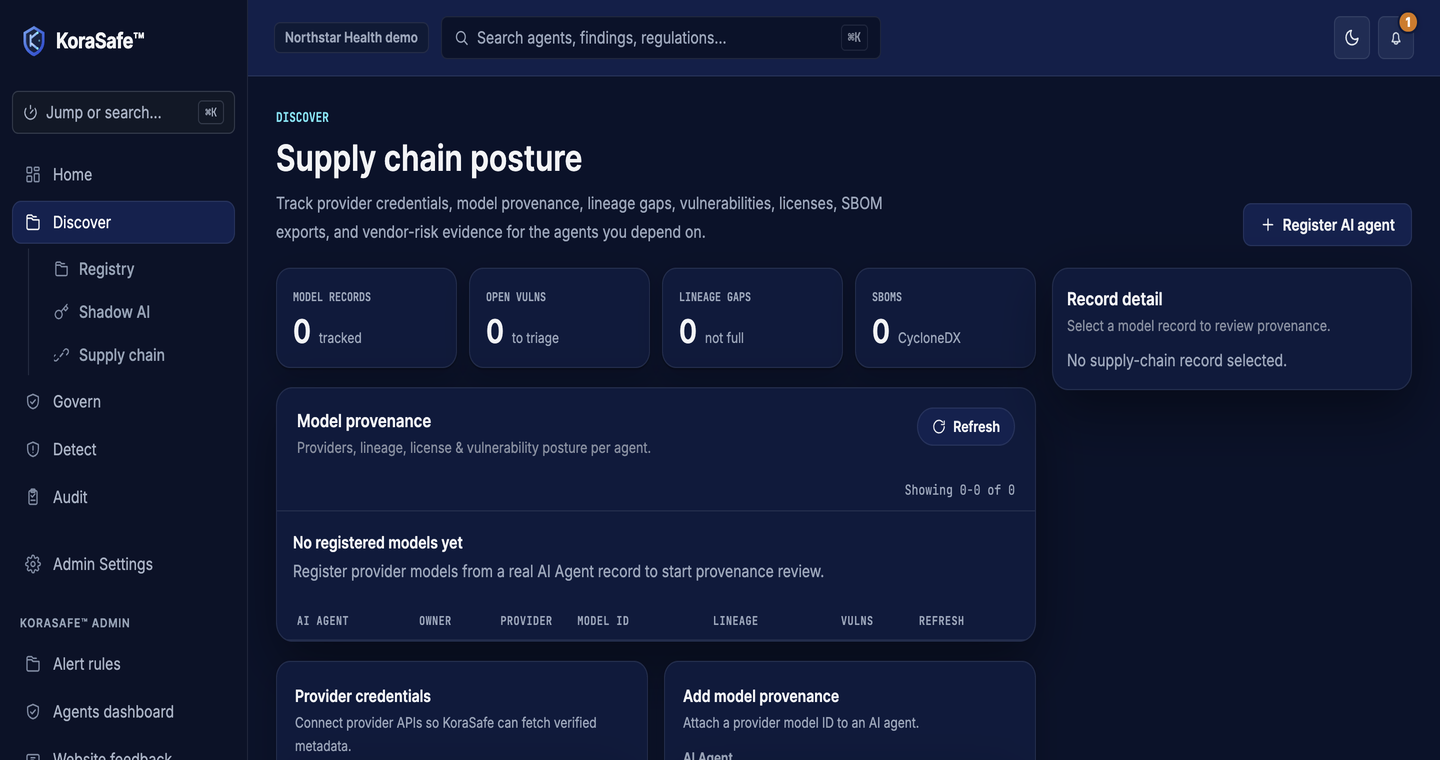
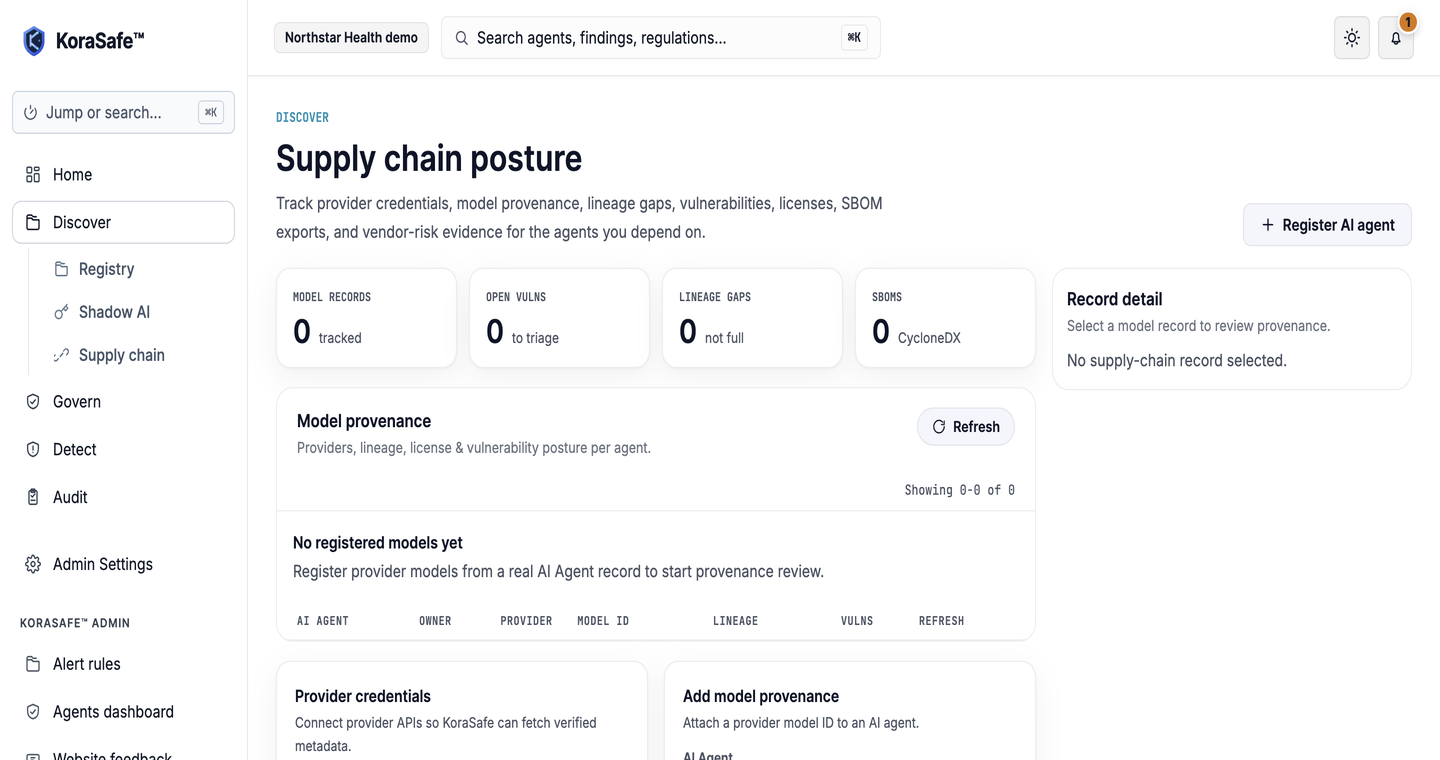
Identify the regulations, standards, sector rules, frameworks, and internal requirements relevant to each agent. Confirm applicable obligations before policy and control work begins.
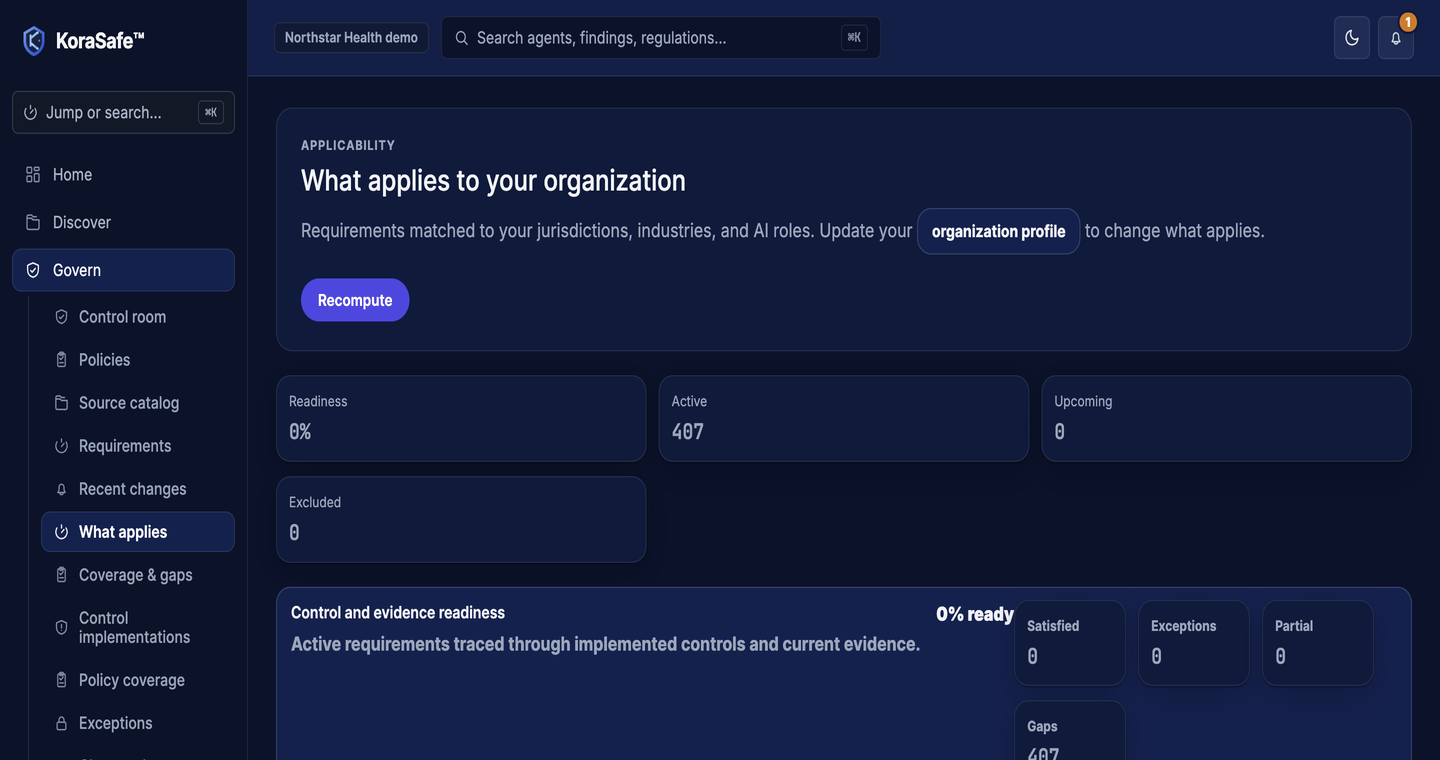
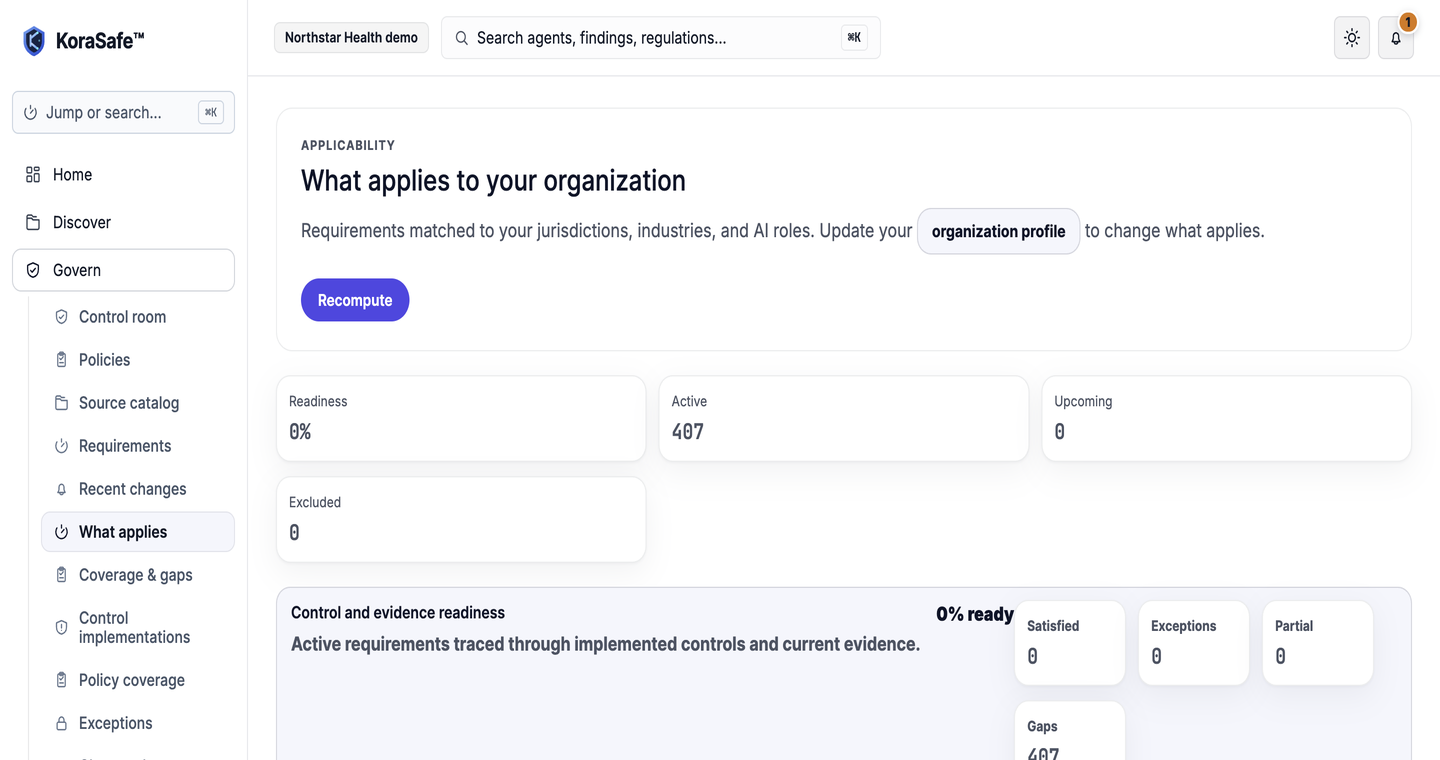
Turn obligations into operational policies. Map controls once across frameworks, then apply them to agents based on risk, data, use case, autonomy, and jurisdiction. Route ownership, approvals, exceptions, and review decisions through the same workflow.
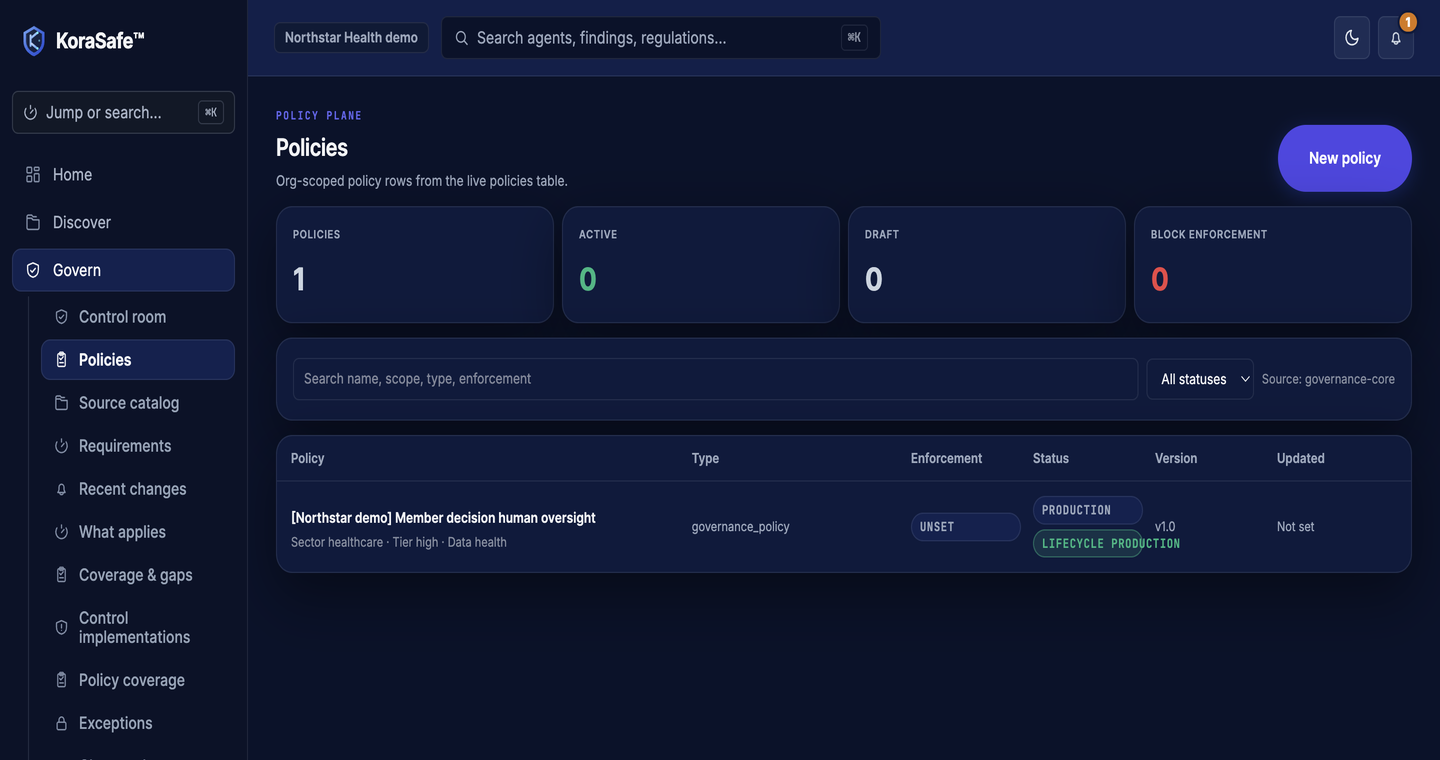
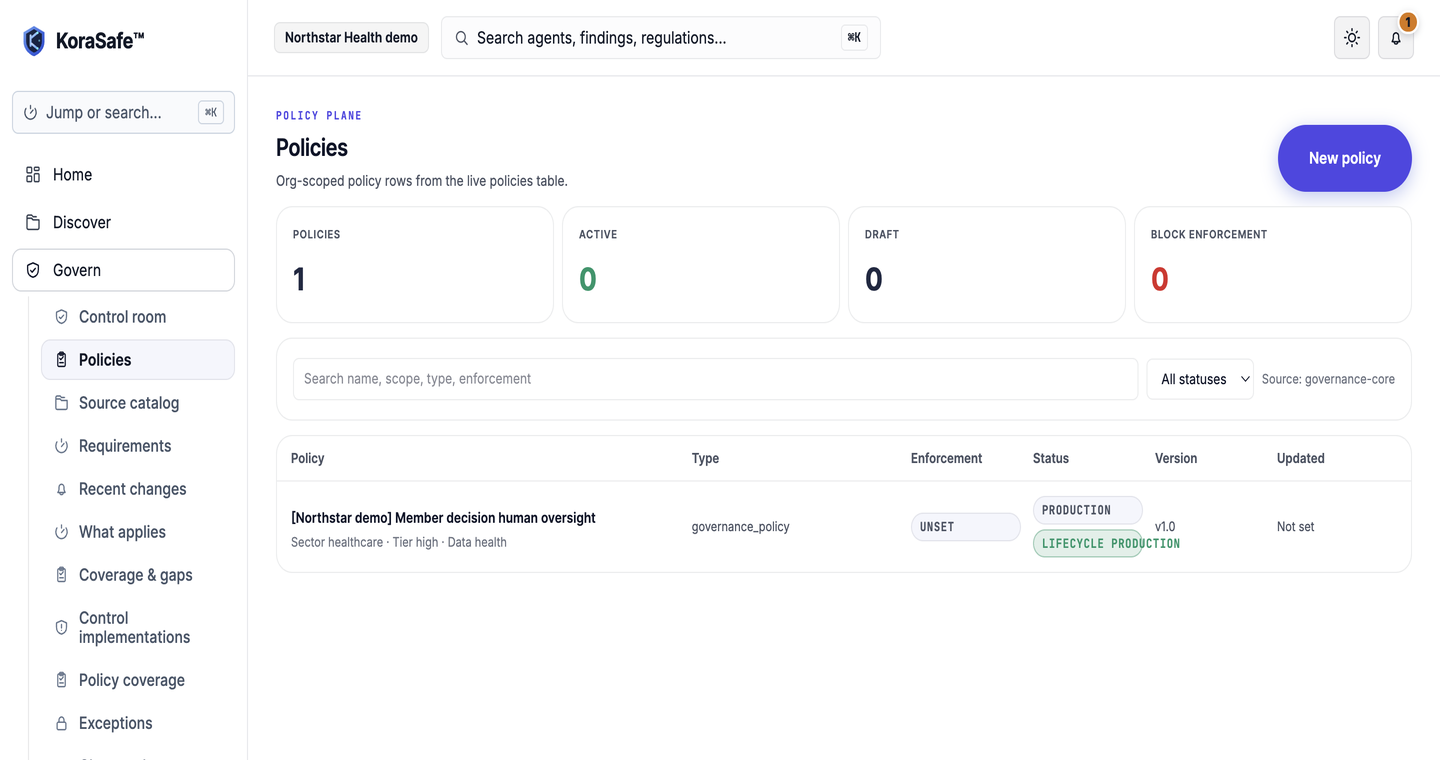
Use pre-launch gates, approval paths, autonomy limits, dry-runs, human review, rollback, and emergency halt controls. Agents move into production inside defined operating boundaries.
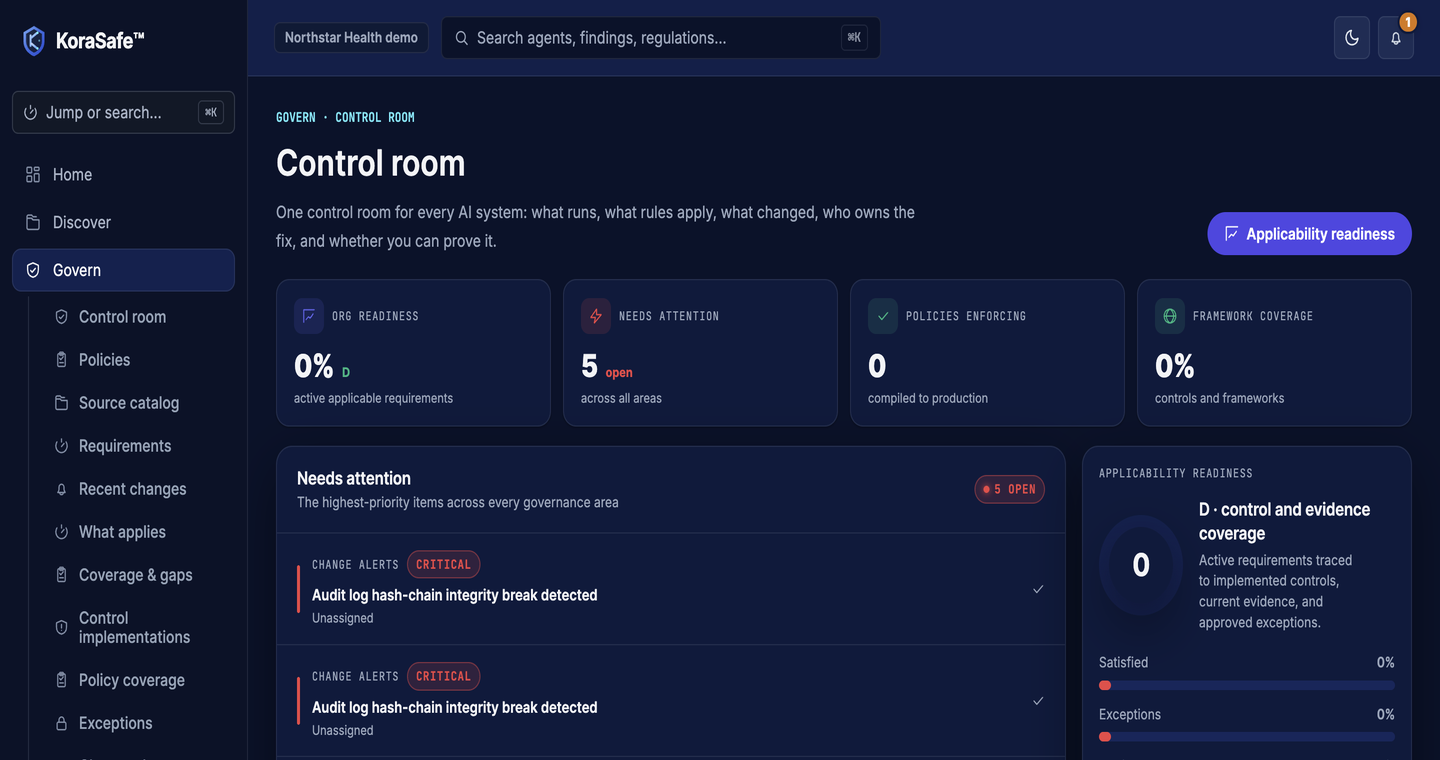
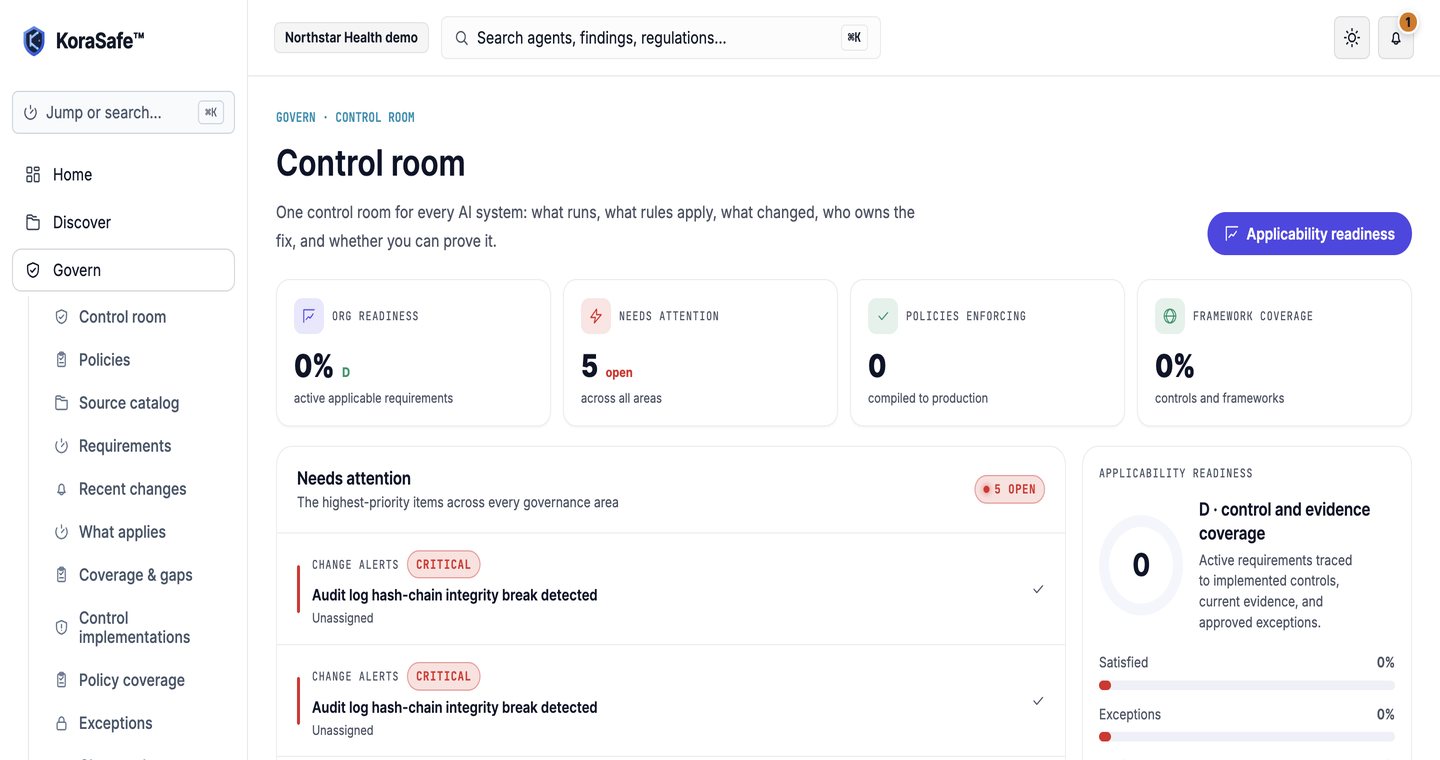
Monitor production behavior and explain why findings occurred. Route issues to the right owner, apply remediation playbooks, track progress, and verify closure.
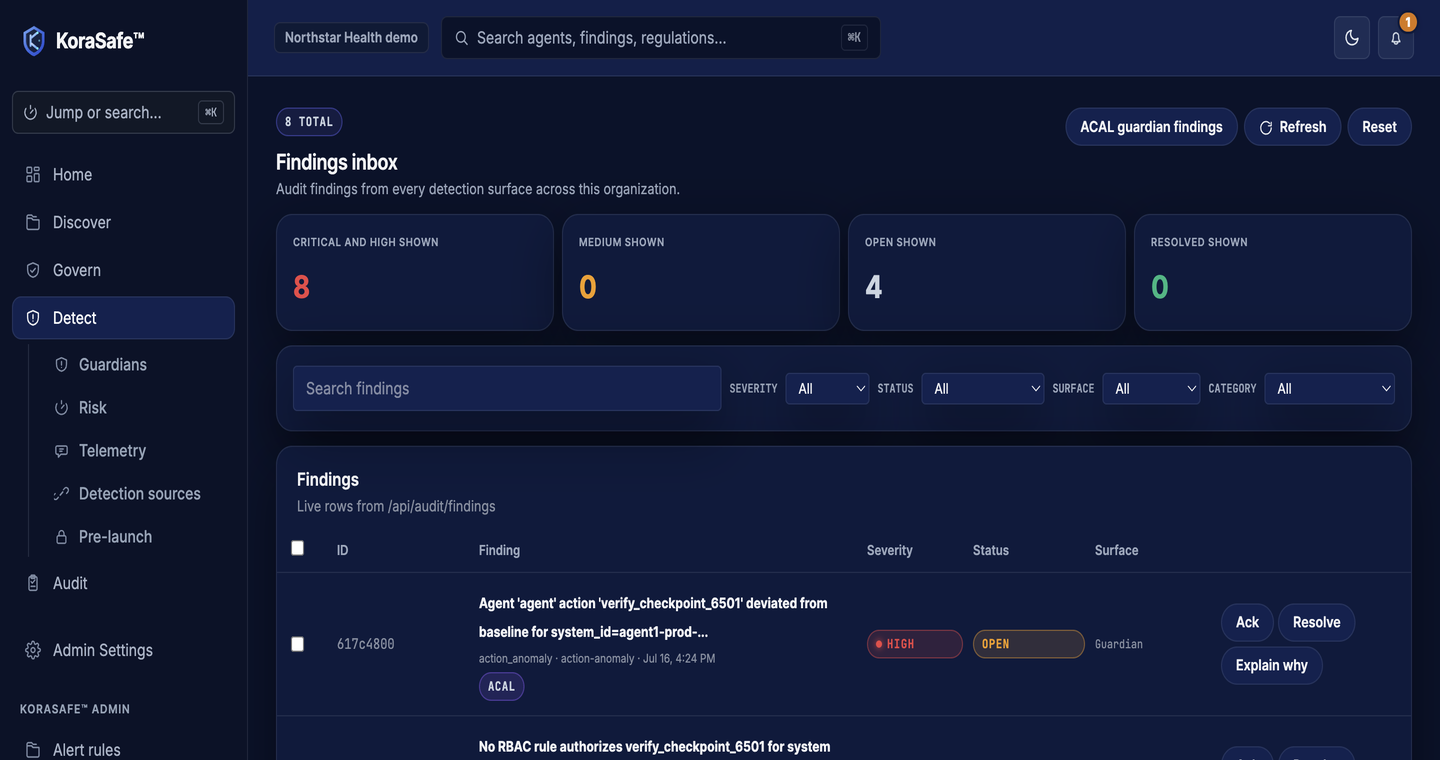
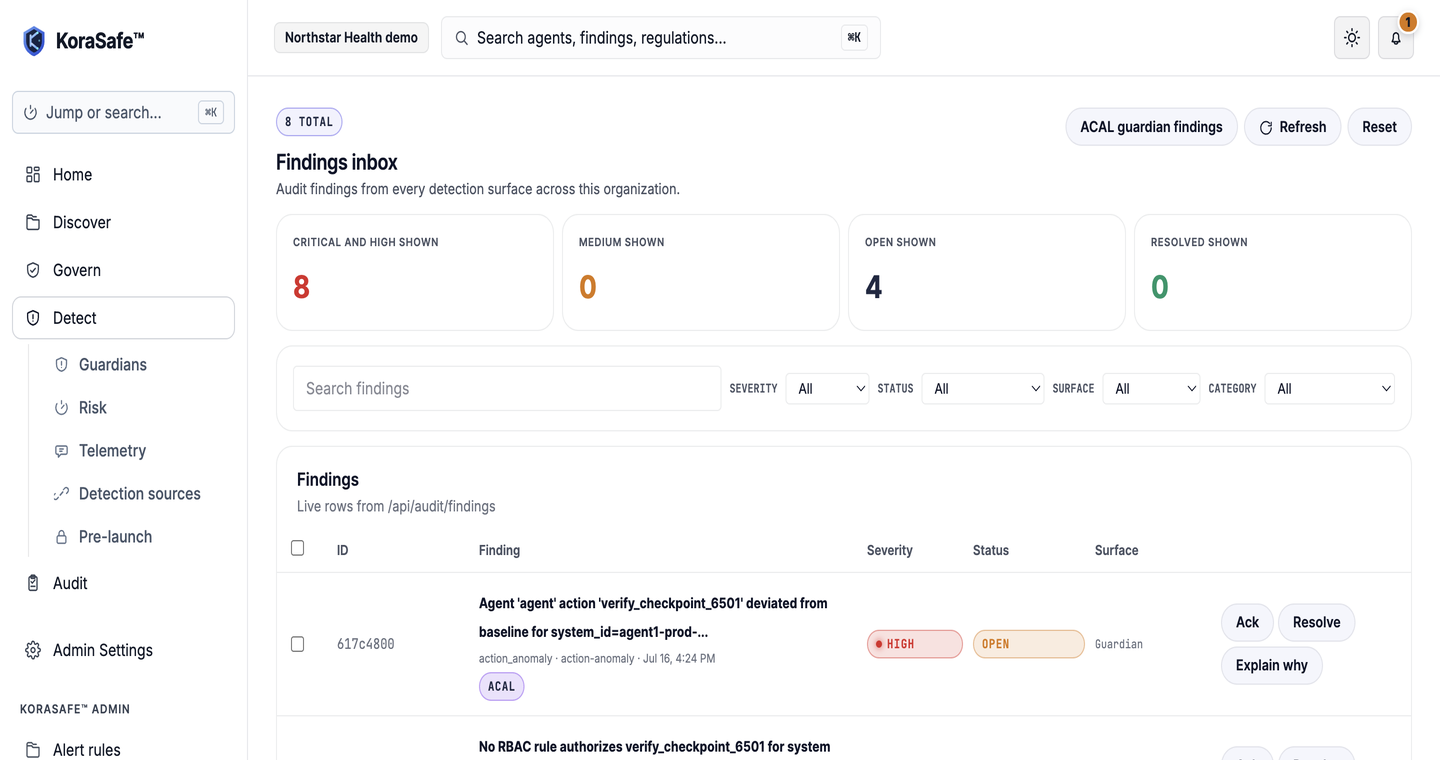
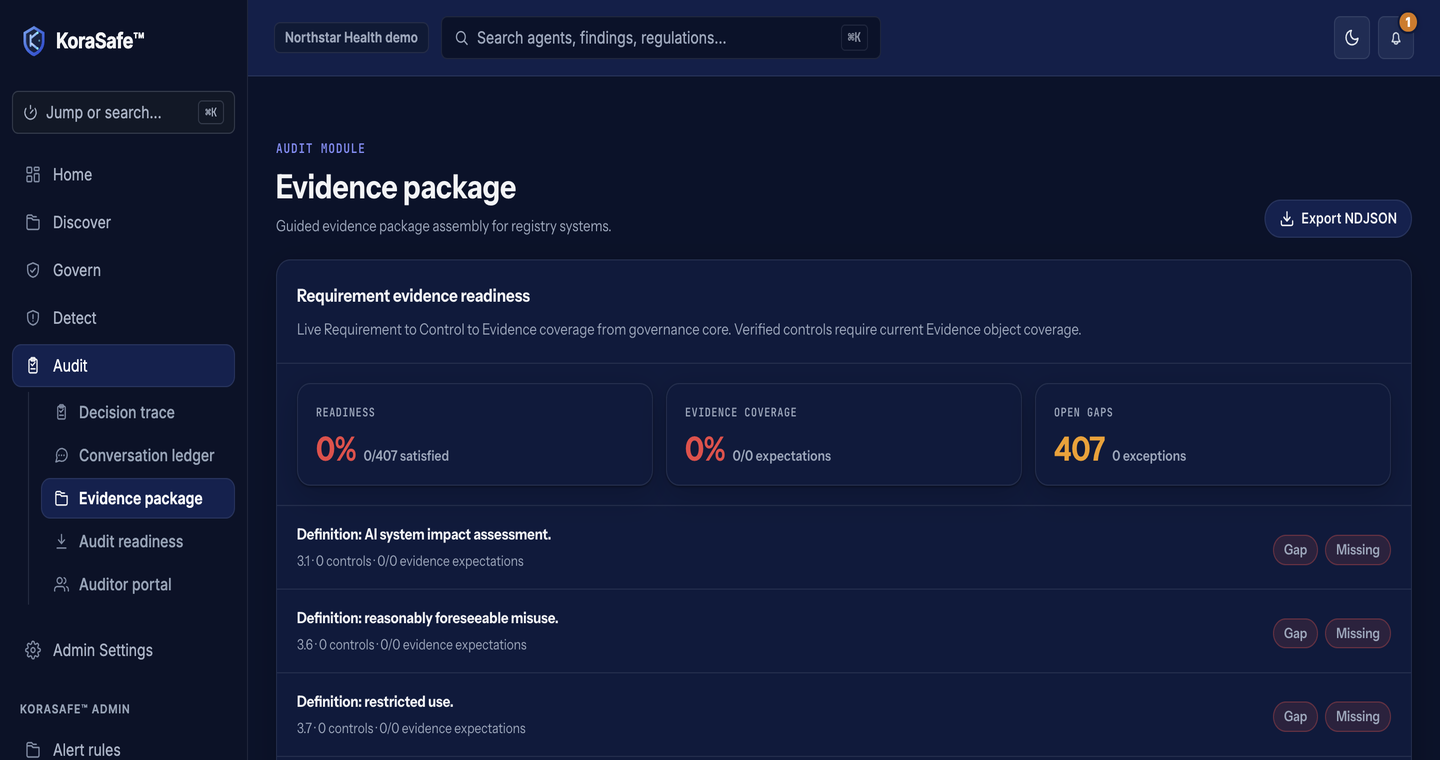
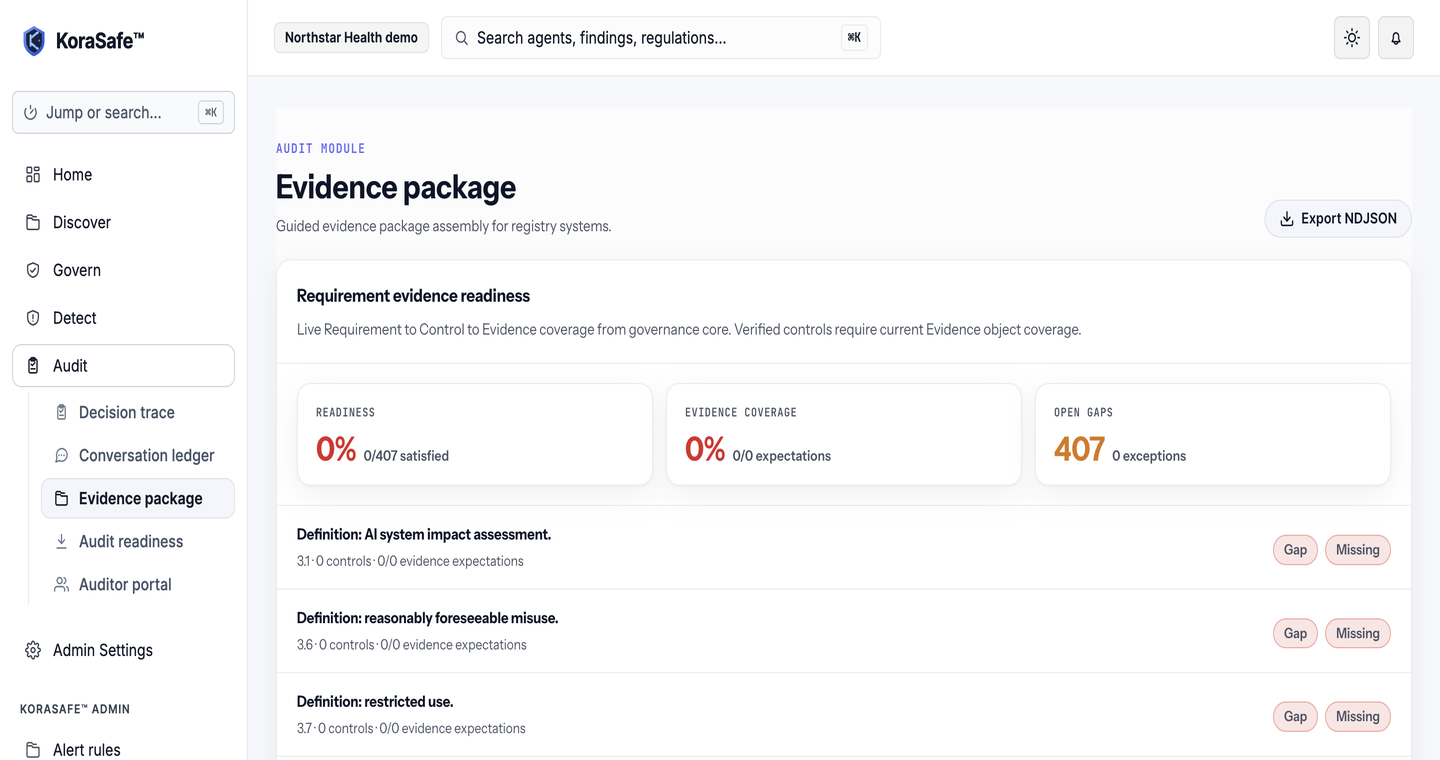
Keep the requirement, policy, control, agent, decision, finding, approval, exception, remediation, and artifact connected. Generate audit-ready evidence that can be reviewed when a leader, customer, auditor, or regulator asks.
Measure governance by what gets better.
KoraSafe helps teams improve AI visibility, move governance decisions faster, reduce open risk, and answer audit requests with less effort.
Bring sanctioned, third-party, and external AI into a governed review path with clear ownership.
Reduce repeated policy and control work. Move faster from agent intake to applicable requirements, approvals, controls, and launch.
Catch issues before launch, respond faster in production, and confirm that remediation is complete.
Create evidence as governance decisions are made instead of rebuilding it before an audit.
Adopt AI agents with control, accountability, and evidence.
Start with one production agent. See its ownership, access, dependencies, applicable requirements, controls, active risks, and evidence gaps in one governed view.