Caught in real time, not next quarter.
Detect sensitive data exposure, prompt injection, unsafe outputs, drift, access anomalies, and policy violations across live agents, pre-launch checks, and outside-in black-box tests.
Every finding updates risk posture and routes into the governance workflow. For agents you cannot instrument, KoraSafe™ tests from the outside and still produces a score, findings, and evidence pack.
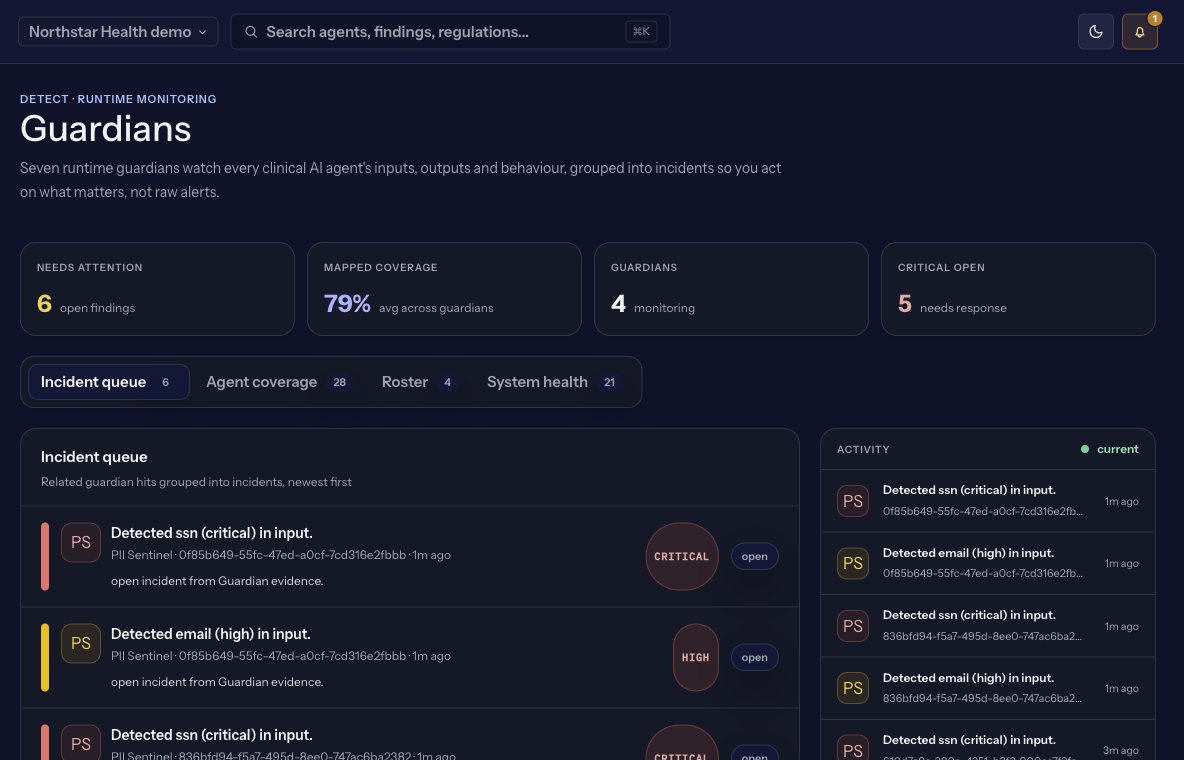
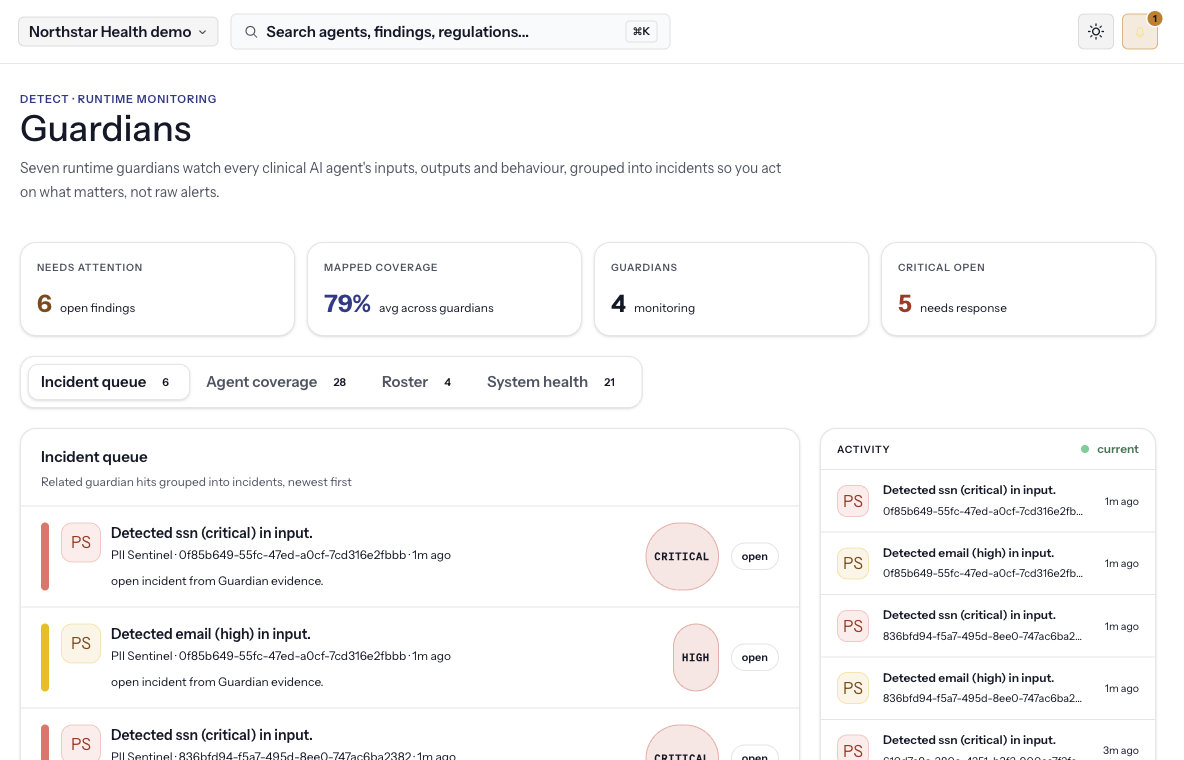
Guardian Agents
Each class of AI risk maps to a guardian module. Where you have a tool connected, its findings arrive in one normalized schema. Where you do not, the coverage view names the gap rather than implying the risk is handled.
AI agents expose organizations on multiple proven harm vectors at once. Per-class coverage in one platform, with every finding normalized to one schema, beats stitching point tools together. Policy, risk, and audit work identically regardless of source.
Black-box Testing
Many real AI agents are ones you didn’t build: a Copilot, a vendor chatbot, or an agent a team switched on without asking. You can’t put guardians inside them, so KoraSafe tests them from the outside instead.
Realistic risky questions, judged against the same rules, turned into a score and an evidence pack.
Control what you run. Test what you don’t. Prove all of it.
Risk Scoring
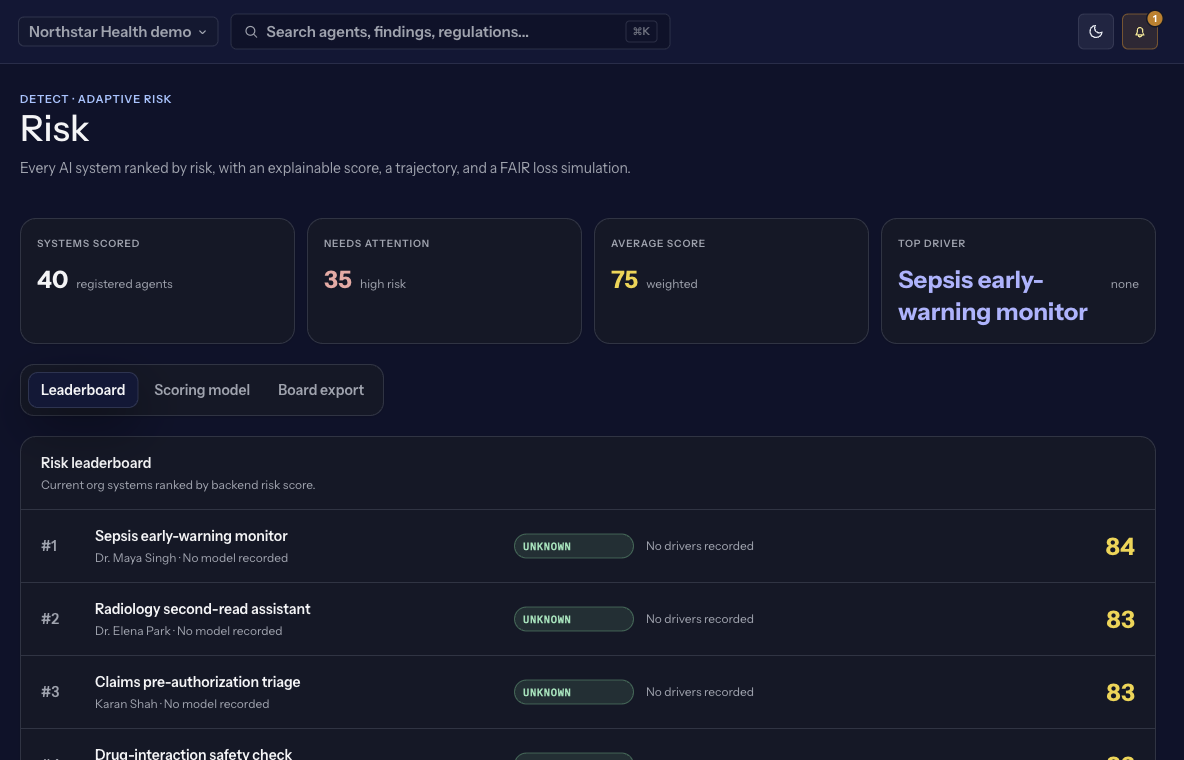
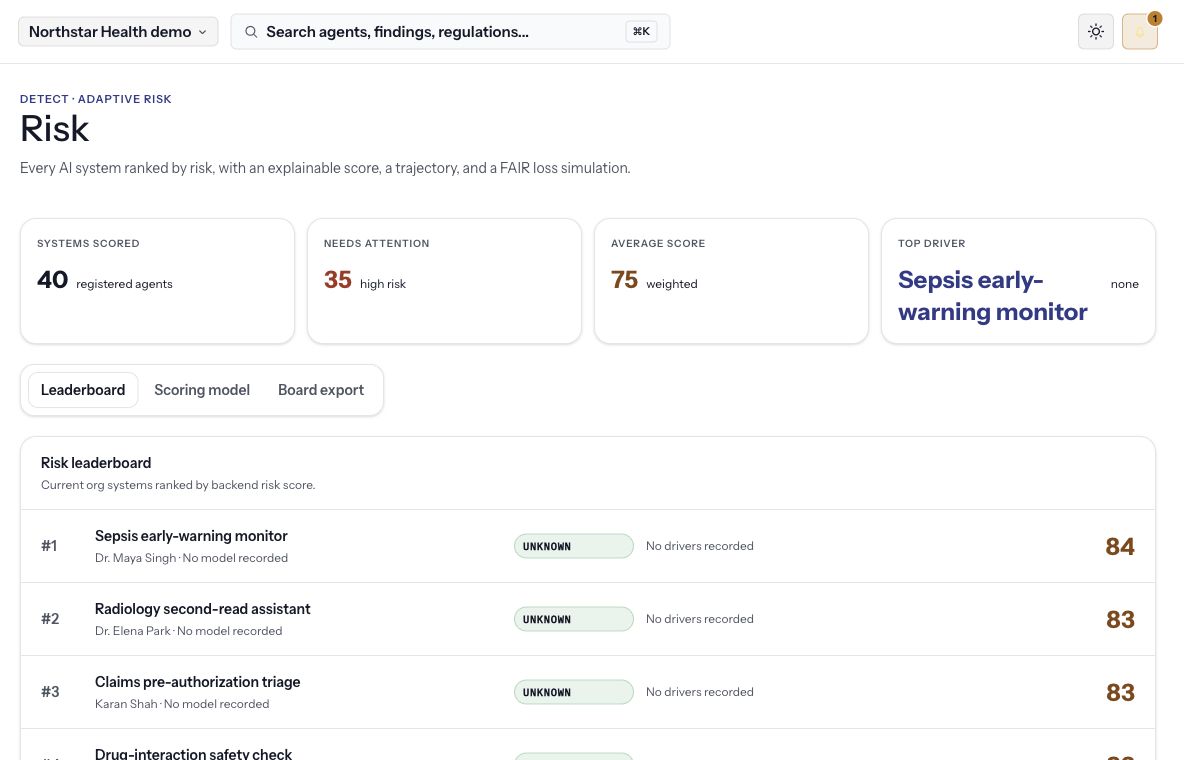
A continuously updated risk score for every registered AI agent with predictive forecasting, presented as a leaderboard, with a FAIR-adapted quantitative model underneath.
Boards need a compact, legible per-system risk signal and a prioritization queue, not hundreds of findings to triage by hand. A tracked score is also evidence that an ongoing risk management system actually operates.
Boards speak in dollars, not red-amber-green. KoraSafe scores risk as loss estimates: backtested, calibrated, defensible.
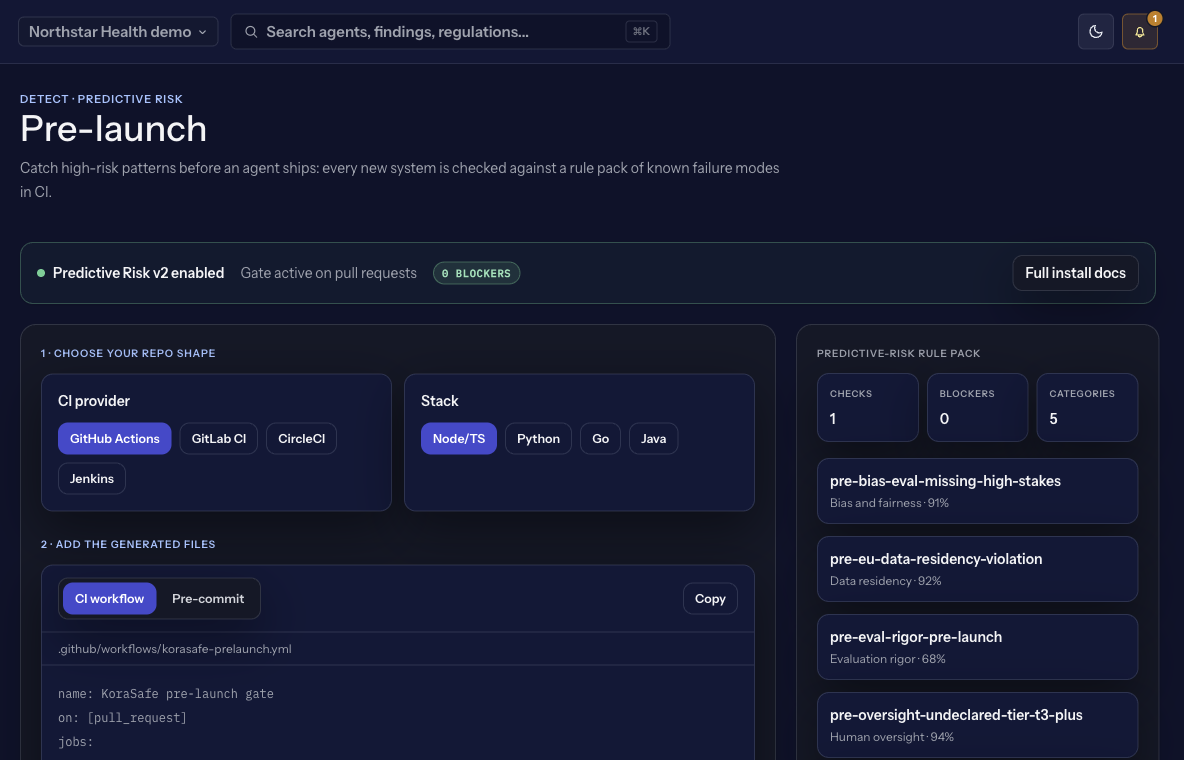
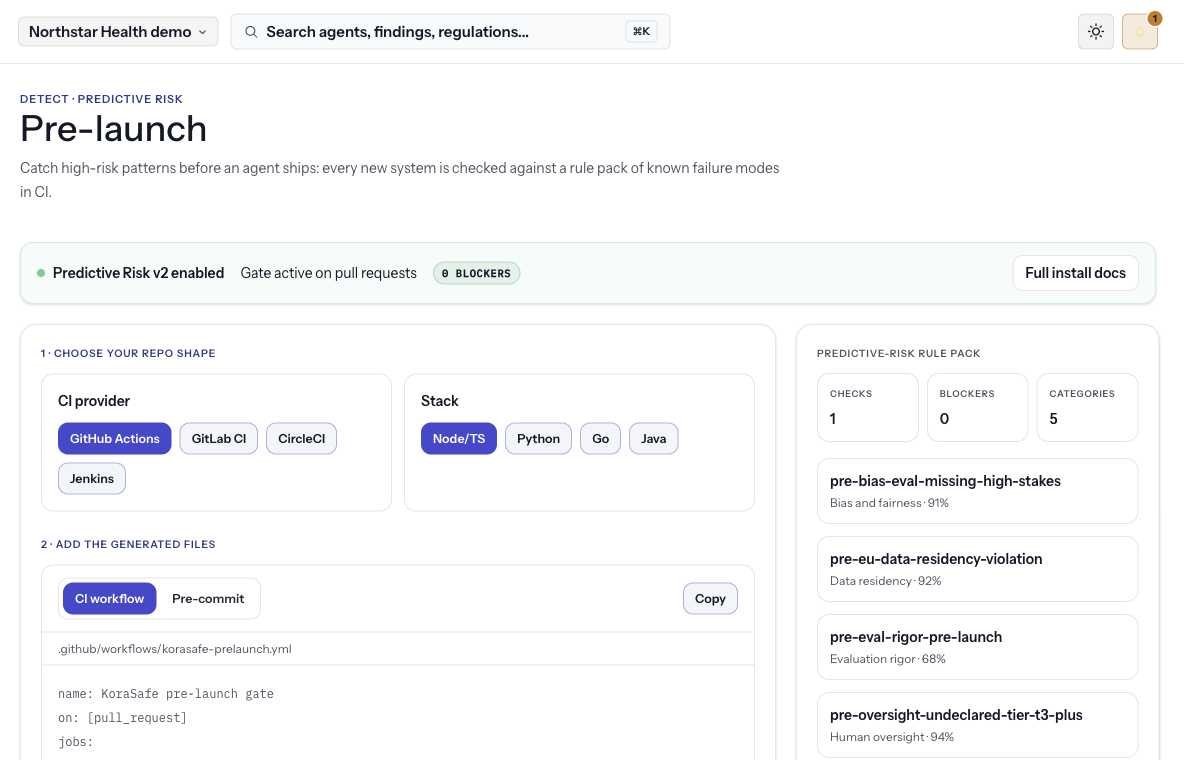
Pre-Launch Risk Checks
A pre-launch check that evaluates a new AI agent’s registration attributes against a research-authored rule pack of known failure patterns, before anything ships.
A gap caught before launch costs far less than one found in production. The engine is deterministic, with no ML inference, so results are reproducible, and every finding carries the rule, the matched condition, and the regulatory citation.
Detection Connectors
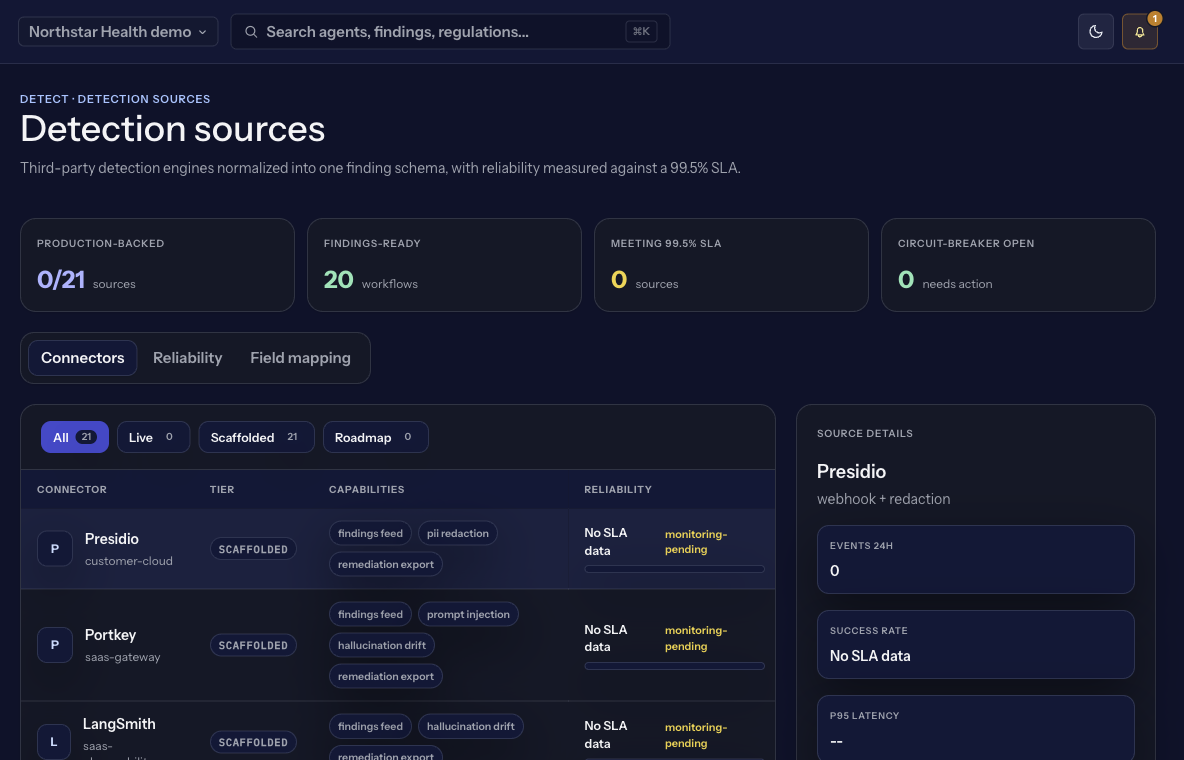
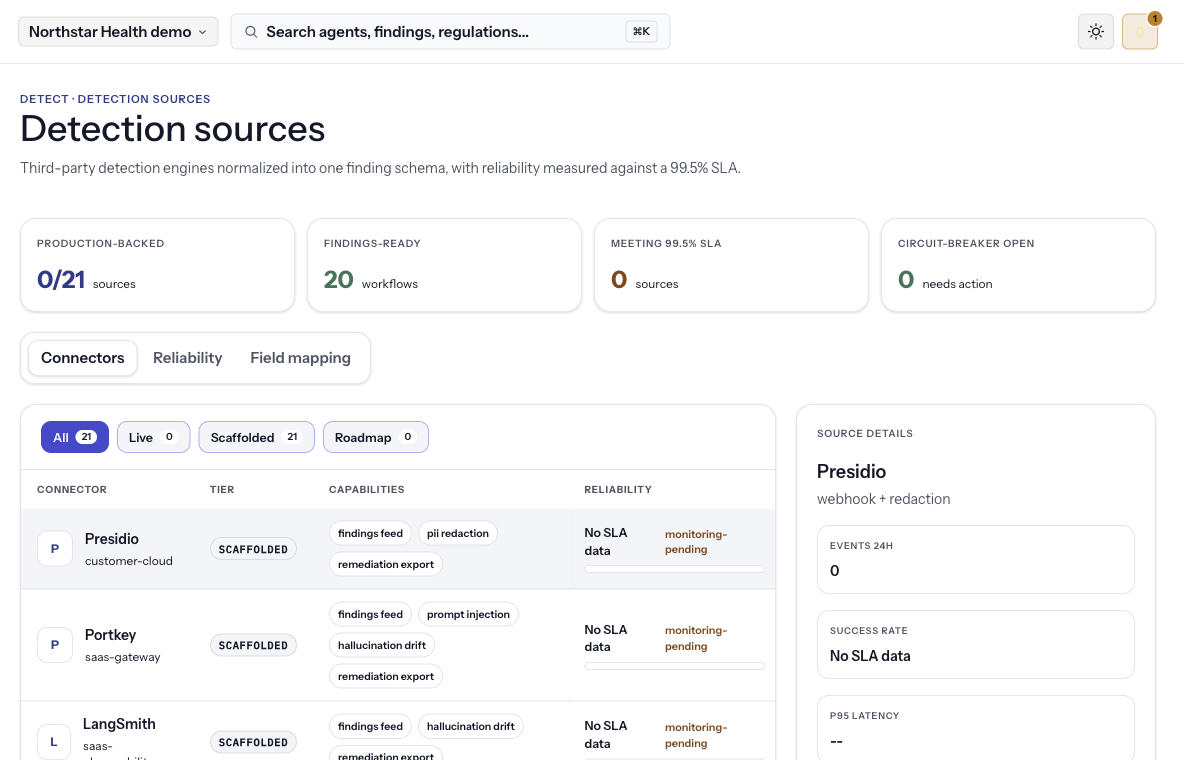
A connector framework that normalizes findings from third-party detection engines into the KoraSafe governance schema, so policy, risk, and audit work the same regardless of which engine fired.
Enterprise security stacks are fragmented, with existing investments in detection tooling. Connectors meet teams where they are instead of forcing replacement, and mapping raw engine output to specific regulatory articles is regulatory expertise, not just engineering.
Catch risky behavior before users see it.
Run runtime detectors, score findings, and route remediation before AI risk becomes an audit issue.